Marketing automation · CRM · Lead follow-up
The leads are already there. The follow-up is what's missing.
Most businesses buy more traffic before fixing what happens after an inquiry arrives. Automation work starts at the other end: route the lead, answer it fast, keep talking to the people who aren't ready yet, and measure every stage so spend decisions stop being guesses.
Map the funnel you actually have
Before any tool gets touched: where do inquiries arrive, who touches them, how long that takes, and where they go quiet. The answer is usually a specific handoff, not a general failure.
That map becomes the build spec – stages, owners, and the automation that removes the manual steps nobody has time for.
Sequences that sound like a person
Drip and nurture sequences written in your voice, triggered by what someone did rather than the day they signed up. Fewer, better messages beat a long automated series nobody finishes.
SMS for anything time-sensitive – release dates, appointment reminders, limited availability – kept on the right side of consent rules.
CRM you'll actually use
Pipelines, fields, and stages set up to match how your team sells, plus the reporting views a manager needs on a Monday morning.
Training included, because the reason most CRMs fail is not the software – it's that nobody agreed what a stage means.
Measurement
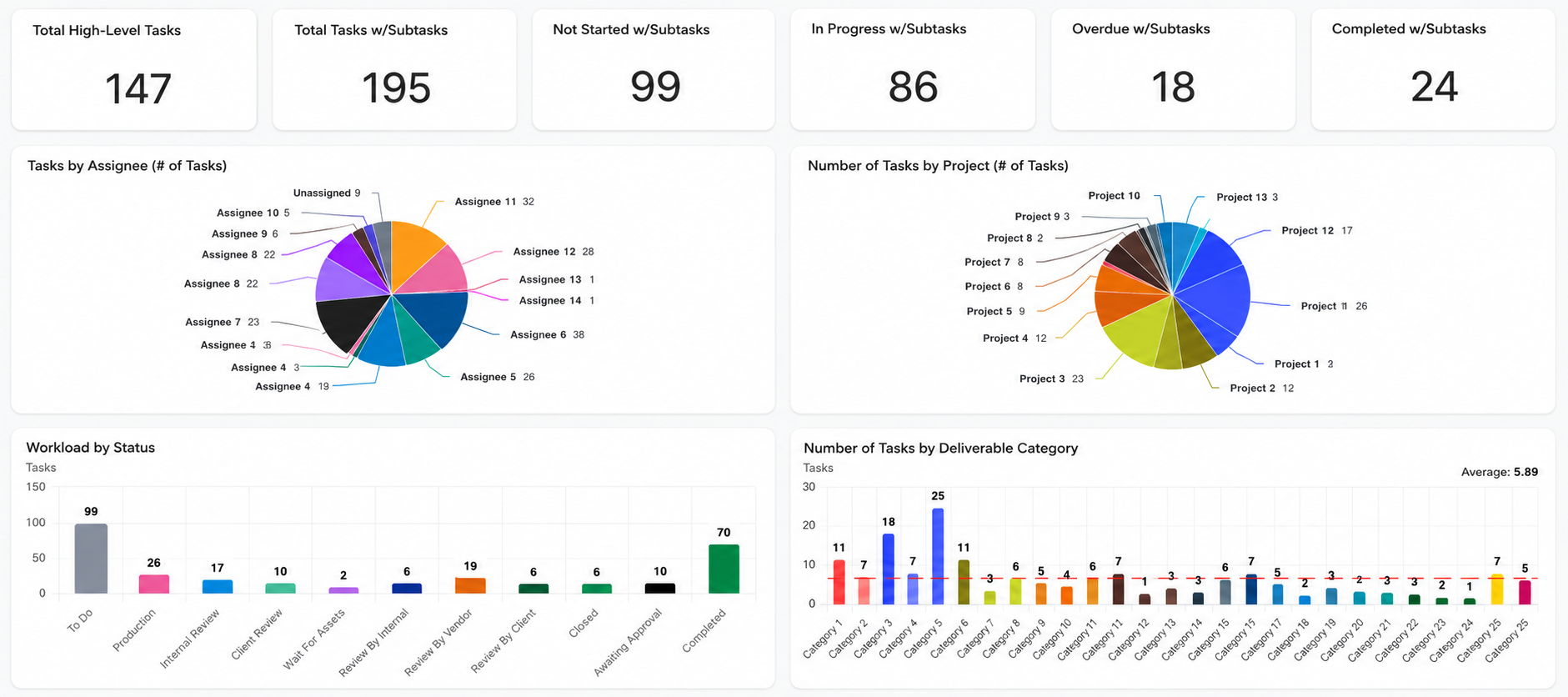
Form and call tracking, source attribution, and reporting on cost per qualified lead and lead-to-close. Once those two numbers are trustworthy, budget arguments get short.
Dashboards get built for whoever makes the decisions, not for a monthly PDF nobody opens.
What you get
Scope, in plain terms.
- Funnel and follow-up audit
- Where leads arrive, stall, and disappear – written up plainly.
- CRM build or cleanup
- Pipelines, stages, fields, and permissions matched to your sales process.
- Email and SMS automation
- Behaviour-triggered sequences written in your voice.
- Lead routing
- Call routing, assignment rules, and response-time alerts.
- Tracking and attribution
- Form, call, and source tracking wired into reporting.
- Team training and SOPs
- Documentation so the system survives staffing changes.
Proof
Where this work has already run.

Frequently asked
The questions that come up first.
- Which platforms do you work in?
- The ones you already pay for, wherever possible – HubSpot, Mailchimp, Klaviyo, Follow Up Boss, Salesforce, or a project-specific CRM. Replacing a platform is a last resort, not a starting point.
- Can you fix an automation setup someone else built?
- Yes. An audit usually finds sequences firing at the wrong stage, duplicate contacts, and reporting that double-counts – all fixable without a rebuild.
- Is this only for high lead volume?
- No. Low-volume, high-value pipelines benefit most, because a single missed follow-up is expensive.
- Do you handle SMS compliance?
- Consent capture, opt-out handling, and sending practices are built into the setup. Legal review of your specific terms stays with your counsel.
Where this runs
systems, automation, and CRM, city by city.
CRM and lifecycle systems that hold up across multi-channel Vancouver programs.
Lead routing and follow-up for Surrey teams losing enquiries between channels.
Automation that keeps Coquitlam pipelines warm without daily manual chasing.
Lifecycle sequences for North Shore businesses with long consideration windows.
Pre-season nurture so Kelowna bookings arrive before the rush.
Systems that let a small Island team run like a bigger one.
Every region and city served is listed below.
Next step
Tell me where leads go quiet. I'll show you what to automate first.
Where I deliver
Across British Columbia, region by region.
Remote-first with regular time on the ground in the Fraser Valley and Lower Mainland, plus scheduled visits everywhere else.
Home base
Fraser Valley, BC
Home base. Often at the same table. Home base. Where the longest engagements live and most of the trust gets built. Close enough to meet in person on a normal week and stay on the same cadence the business actually runs at.
Langley · Abbotsford · Chilliwack · Mission · Maple Ridge
AbbotsfordChilliwackMaple Ridge & Pitt Meadows
More on Fraser Valley →Primary metro
Lower Mainland · Greater Vancouver, BC
Close to the city, in person when it matters. A short drive from home base. Easy to meet in person for kickoffs, presentation centres, and the moments that need a room – then run the rest on a tight async cadence.
Burnaby · Surrey · Coquitlam · Richmond · New Westminster · Delta
Surrey & White RockCoquitlam & the Tri-CitiesNew WestminsterDelta, Ladner & Tsawwassen
More on Lower Mainland · Greater Vancouver →City of Vancouver
Vancouver – City, West, North & East, BC
In the city when the work calls for it. The fast city. Downtown, West Van, the North Shore, and East Van each set their own bar. In person for the moments that need it, asynchronous the rest of the time so timelines keep moving.
Downtown · West Vancouver · North Vancouver · East Vancouver
North Vancouver & the North Shore
More on Vancouver – City, West, North & East →South Vancouver Island
Sidney to Victoria, BC
Mostly remote, sometimes a ferry. Mostly remote, sometimes a ferry. Light on overhead – shared docs, weekly check-ins, in person when the project actually needs it.
Victoria · Saanich · Oak Bay · Sidney · Sooke
More on Sidney to Victoria →Sunshine Coast
Sunshine Coast, BC
Remote-first, with a soft spot for the Coast. The region I'd take more work in just to be there more often. Remote-first by default, on the ferry when a project earns it, and run on the same cadence as everything else.
Gibsons · Sechelt · Roberts Creek · Halfmoon Bay
More on Sunshine Coast →Interior BC
Okanagan & Shuswap, BC
Remote across the Interior, on the calendar that fits. The seasonal market. Run remotely across Kelowna, Vernon, Penticton, Salmon Arm, and Sicamous – sequenced around the calendar the business actually lives by.
Kelowna · Vernon · Penticton · Salmon Arm · Sicamous
More on Okanagan & Shuswap →