Case 11 · Addition by Redekop Ferrario Properties (Willoughby, Langley, BC)
Page One in Fourteen Days
A presale townhome community competing against five other Langley projects for the same buyers needed a website that search engines – and now AI answer engines – could actually understand. We rebuilt addition-living.ca against a keyword strategy: purpose-built pages for rooftop patios, three-bedroom and flex layouts, Step Code 4 energy efficiency, CMHC Eco Plus, and SkyTrain connectivity, plus dedicated floorplan pages and a clean redirect map. Fifteen days after launch: 128 clicks, 2,402 impressions, a 5.3% click-through rate, the 90-day Top-10 goal met in week two, and the highest search visibility in the competitive set – before a dollar of ad spend.
Results at a glance
Full numbers ↓- 2,402 impressions at a 5.3% CTR in the first 15 days live
- 128 clicks
- A 90-day plan objective met in the second week after launch
- Top 10 in 14 days
- Highest of six competing Langley presale projects, and the only Top-10 ranking in the set
- 1.53% visibility
Search
Rankings
Competitive
01 · Problem
The starting point.
Context
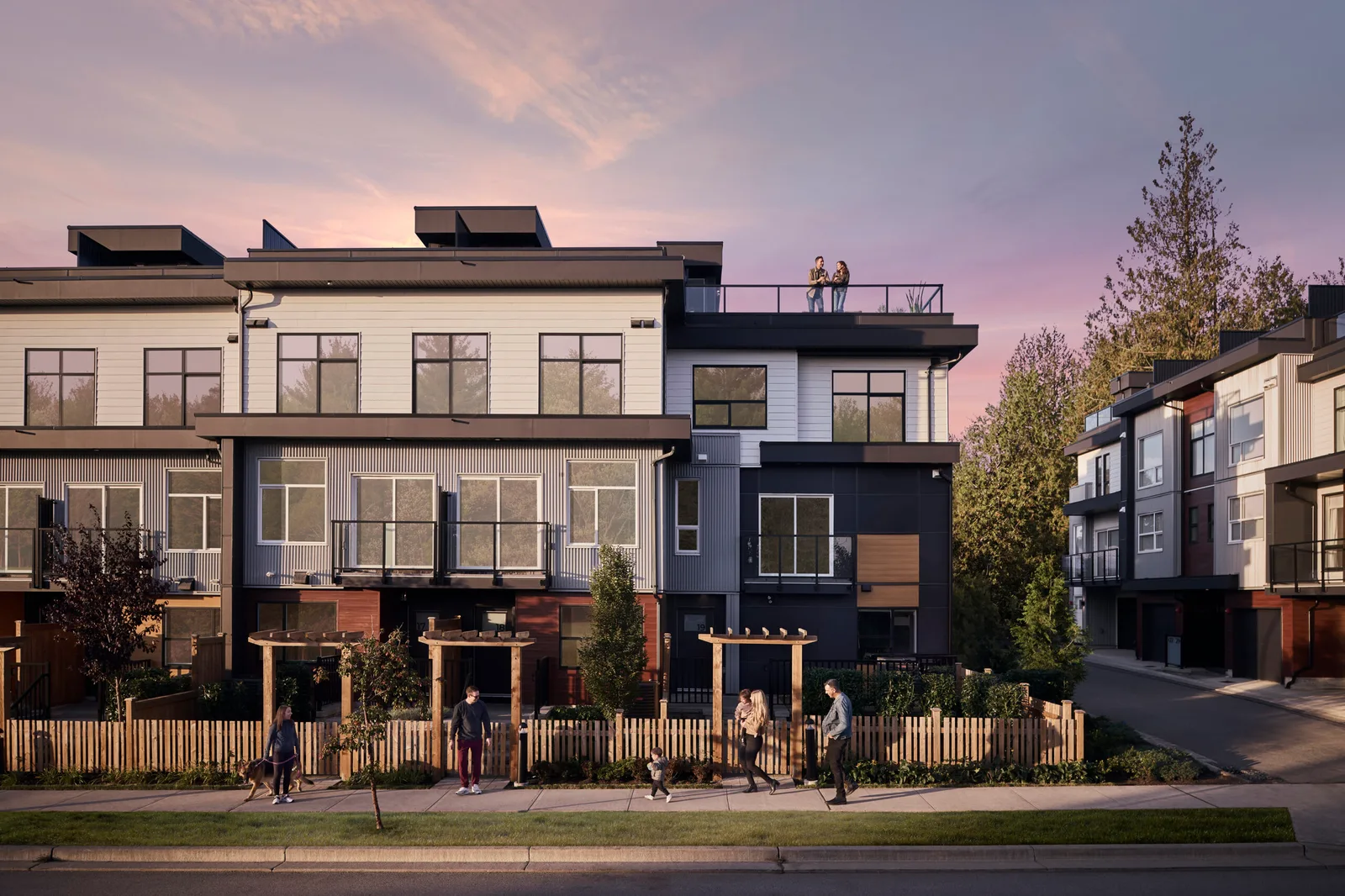
Addition is a collection of 3 bedroom and 3 bedroom + flex townhomes with private rooftop patios in Willoughby, Langley, developed by Redekop Ferrario Properties.
A June 2026 Keyword Strategy & Search Visibility Plan set the baseline: the Willoughby keyword cluster sat between positions 11 and 26 with zero Top-10 rankings, and the existing site read like a brochure rather than an answer to what buyers were searching.
The rebuild went live July 8, 2026 through a staging-first workflow so nothing broke on the live domain. This case covers the first fifteen days of measured performance, July 8 to 22.
Reporting sources: Google Search Console, Semrush domain overview and position tracking (Canada, 25 keywords, 5 competitors), live SERP captures, and PageSpeed Insights.
Challenges to solve
- Six presale projects competing for the same Langley buyer searches, with the closest competitor already holding visibility
- A relaunch resets Google's read of the domain – rankings get re-tested and early volatility is expected
- Buyers search for features, not project names: rooftop patios, flex rooms, energy efficiency, future SkyTrain access
- Legacy URL structures (/floorplan/, /bedroom/) split authority across duplicate paths, including a dead 404
- The brand name attracts renovation-intent searches (“home additions langley”) that would waste future ad spend
02 · What I did
The plan, and the moves.
Plan
- Search goal: move the Willoughby keyword cluster into the Top 10 on a 30/60/90-day timeline
- Content goal: a purpose-built page for each differentiator buyers actually search – rooftop patio + AC, included features, Step Code 4, 3 bedroom, 3 bedroom + flex, SkyTrain connectivity, Willoughby vs. Willowbrook, CMHC Eco Plus
- Structure goal: dedicated pages for Plans A, B1, B2, and D with unique copy, specs, and per-plan FAQ schema
- Visibility goal: optimize for traditional search, generative engines, and answer boxes together, so the site is legible to Google and AI assistants alike
- Technical goal: consolidate every legacy URL to the new structure and hold PageSpeed and accessibility scores above launch levels
Actions & what changed
Action
Applied the June keyword strategy across the full site – titles, meta descriptions, H1s, internal links, image alt text, FAQ blocks, and sitemap structure
What changed
Google could map the site to real buyer intent instead of guessing; impressions roughly doubled from 83 on day one to a 170–195 daily steady state
Action
Built eight differentiator landing pages covering rooftop patios, included-features value, Step Code 4, both floorplan types, SkyTrain connectivity, the Willoughby vs. Willowbrook comparison, and CMHC Eco Plus
What changed
Non-branded discovery started immediately: the SkyTrain connectivity page became the #2 impression earner at position 6.3, and the rooftop patio page averaged position 5.2
Action
Split Plans B1 and B2 out of a shared URL into dedicated floorplan pages with unique content and FAQ schema
What changed
Each plan competes on its own layout-specific searches; the floorplans hub earned 16 clicks in the first two weeks
Action
Redirected 11 legacy /floorplan/ and /bedroom/ URLs (including a dead 404 and the sold-out C Plan) to the four canonical floorplan pages, and removed the obsolete taxonomy sitemap
What changed
Earned authority consolidates instead of leaking; every old link anywhere on the internet now lands on the right page
Action
Structured factual, question-answering content so answer engines could cite it directly
What changed
addition-living.ca is now cited as a source inside Google’s AI Overview for “step code 4 townhome”, with branded sitelinks and a knowledge panel rendering for brand searches
Action
Flagged renovation-intent brand queries for the Google Ads negative-keyword list ahead of campaign launch
What changed
Roughly 55 monthly impressions of mismatched intent stay out of paid spend before campaigns turn on
Before and after the rebuild
June 15 baseline vs. July 22 status, 15 days after launch.
Before
- Willoughby keyword cluster ranked 11–26 with zero Top-10 positions
- Brochure-style site with no page mapped to feature-level buyer searches
- Plans B1 and B2 sharing a single URL; 11 legacy paths including a dead 404
- No presence in AI-generated answers or branded knowledge panels
After
- First keyword in the Top 10, three more sitting at position 13 and climbing
- Eight differentiator pages plus four dedicated floorplan pages with FAQ schema
- Every legacy URL consolidated to the canonical structure; sitemap index resubmitted
- Cited in Google’s AI Overview for “step code 4 townhome”, with sitelinks and a knowledge panel
03 · Outcomes
Quantified results.
By the numbers
128
Google clicks in the first 15 days live, up 42% week over week
2,402
Search impressions across the same 15 days
5.3%
Click-through rate – strong for a newly relaunched real-estate domain
9.5
Average position, improving from 10.2 on launch day to 7.0 by July 22
14 days
To meet the plan’s 90-day Top-10 objective on “willoughby townhomes for sale”
1.53%
Semrush visibility – highest in a set of six competing Langley projects, and rising
+25.3%
Organic keywords month over month (94 total), with estimated organic traffic up 42.6%
92 / 99
PageSpeed performance (mobile / desktop) with 100s for accessibility, best practices, and SEO
57%
Click-through rate on “addition langley”, ranking #1
Bottom line
Two weeks in, the website is doing its job: real buyers are finding Addition on Google, clicking at a healthy rate, and the site is out-ranking every competing project in its set – all before any paid media. The foundation is fast, technically clean, and ready for ads to run on top of measurement that already works.
Page One in Fourteen Days – project gallery
Similar services.
Scope a project on any of these directly, or send the brief and we'll sequence them together.
SEO & Search
Keyword strategy mapped to a full site structure, then measured against dated baselines.
Web Design & Development
Staging-first rebuild with dedicated floorplan pages and a clean redirect map.
Copywriting & Content
Question-answering pages written for buyers, search engines, and answer engines at once.
FAQ
Answers, briefly.
- How does a new site rank in the Top 10 in two weeks?
- By answering searches that already have demand and little competition. The plan mapped the Willoughby cluster and the feature-level searches buyers actually type – rooftop patios, flex rooms, Step Code 4, CMHC Eco Plus – then gave each one a real page with specs, copy, and FAQ schema. Google had something specific to rank instead of a brochure homepage.
- What does being cited in an AI Overview mean in practice?
- When Google’s AI-generated answer explains energy-efficient townhomes for the query “step code 4 townhome”, it draws from Addition’s own Step Code 4 page. Structured, factual, question-answering content is what answer engines quote – which is why the strategy targeted generative and answer-engine visibility alongside traditional rankings.
- Some keywords softened after launch. Why?
- A relaunch makes Google re-evaluate the whole domain, so positions move in both directions for several weeks. Across the tracked set, 10 keywords improved against 11 that softened while Top-20 keywords doubled. Round-2 optimization consolidates the terms that slipped once there is enough user-behaviour data to act on.
- What comes next?
- Round-2 SEO optimization on the softened terms, finishing the reporting dashboard so visits, form leads, conversion rate, and cost per lead sit in one refreshable view, then activating Google Ads with UTM tagging and negative keywords – and a monthly maintenance cadence so early gains compound rather than drift.